

Here are the Show Notes for Episode #46 of Fire Branded
Short video clips, and segment rundowns, as well as a link to the full episode
Summary
“Educated Catholics” leaving the Church isn’t the flex people think it is—it’s often proof that formation never took root. In this episode, the "Catholic Firebrand" (TJ Haines) dismantles the illusion of “Catholic education,” exposes rhetorical sleight-of-hand from Protestant critiques, and challenges both Catholics and Protestants to confront a hard question: What if the Catholic Church is actually what Christ established?
💥 Segment 1 — “Church” Isn’t Just a Hangout
Jesus didn’t establish a loose network of believers—He established an authoritative, covenantal assembly.
I open by dismantling a common Protestant reduction: that “church” simply means a community of believers. I walk through the linguistic and biblical reality behind ecclesia, showing that Christ established something far more concrete—an authoritative, structured, covenantal body.
- “Ecclesia” (and its Aramaic root) refers to an institution + a people
- Reducing “church” to a community strips it of authority and structure
- Institution and believers are inseparable—like body and soul
“If you reduce the Church to just a community, you don’t have a Church—you have a Jesus fan club.”
💥 Segment 2 — The Myth of ‘Catholic Education’
Twelve years in Catholic school doesn’t equal formation—it often just means attendance.
Using Sean Hannity as a case study, I break down the illusion of being “Catholic educated.” I explose how surface-level schooling, misunderstood credentials, and lack of real reception of the faith produce confidence without substance.
- “Seminary” claims often refer to naming conventions, not formation
- Theology classes ≠ deep theological understanding
- The real issue: what was received vs. what was merely presented
“You didn’t become Catholic educated—you just had your ass in a seat in a Catholic classroom.”
💥 Segment 3 — When Error Sounds Like Truth
Bad theology is most dangerous when it sounds right.
I zero-in on subtle but dangerous theological errors—especially definitions that sound right but collapse under scrutiny. He clarifies the true meaning of repentance and exposes the danger of grounding morality in personal perception rather than divine truth.
- “Repentance = change of heart” → incomplete and misleading
- True repentance = turning from sin + fidelity to the Gospel
- Sin isn’t defined by what we feel—but by what God declares
“The most dangerous lie is the one that looks exactly like the truth.”
💥 Segment 4 — The ‘Catholics Leaving’ Narrative
The claim that Protestants are “pulling Catholics out” doesn’t hold up.
TJ closes by dismantling the claim that Protestants are successfully “pulling Catholics out” of the Church. He reframes the data and the reality: what’s often being “converted” isn’t a formed Catholic—but someone who never truly received the faith.
- Many “former Catholics” were never practicing or formed
- Catholics often retain the label even after leaving
- Protestant converts to Catholicism tend to be serious, informed, and intentional
“You didn’t convert a Catholic—you converted a secularist who used to wear the label.”
📌 Referenced Topics
- Meaning of Ecclesia and Old Testament Kahal
- Apostolic authority and Church structure
- Nature of repentance and conversion
- Catholic vs. Protestant conversion patterns
- Crisis in catechesis and reception of doctrine
Full Episode
 TJ Haines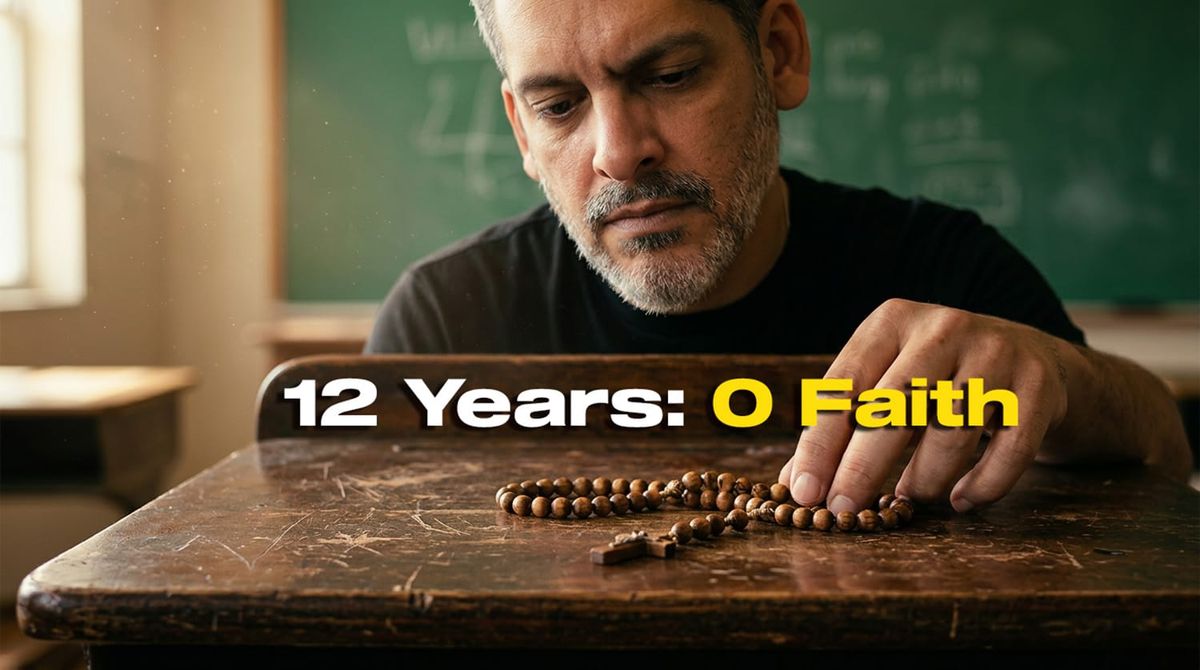


Member discussion