



The tension between the Vatican and the Society of Saint Pius X (SSPX) is causing harm to the church in a several hidden ways. This drama, at its core is a question every Catholic must answer: Who has authority in the Church Christ founded?
The SSPX often frames its resistance as fidelity to tradition. But resistance to the living authority of the Church doesn’t safeguard tradition—it undermines it.
Defiance Is Not a Catholic Virtue
Christ didn’t leave behind a loose federation of theologians. He established a visible Church and entrusted governing and teaching authority to the apostles — authority that endures in the Magisterium.
He told St. Peter “You are Peter, and on this rock I will build my Church” (Matthew 16:18). To the apostles collectively: “He who hears you hears me” (Luke 10:16). Authority in the Church is not self-assumed; it is given. Something more Catholic laity need to keep in mind, as sufficient understanding of this core Catholic principal seems to be disappearing even amongst those in the pews. (Continues below)
 T.J. Haines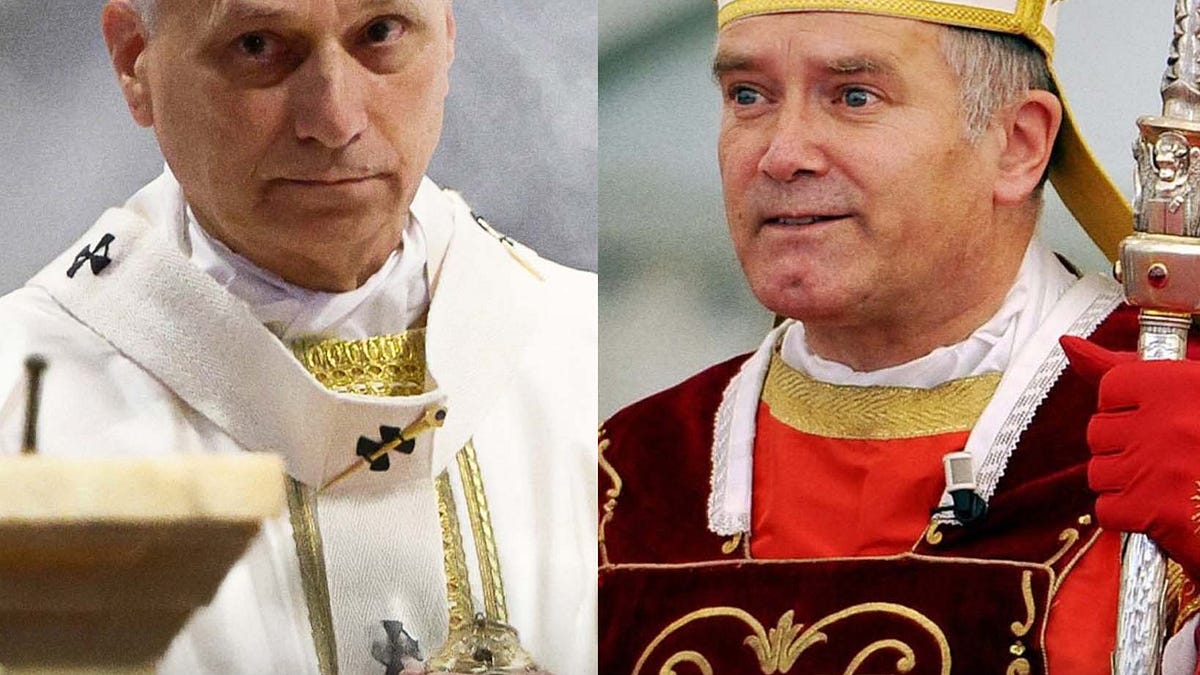
Scripture
Public defiance of the Church’s lawful authority teaches ordinary Catholics a dangerous lesson: that obedience is conditional upon personal agreement. But Scripture does not present obedience as optional. In Acts 15 (Council of Jerusalem), when doctrinal confusion arose, the matter was settled by the apostles in council. The faithful did not splinter into factions claiming private fidelity to “the old ways.” They received the judgment of the Church.
In the narrative, we even see James—another apostle, and bishop of Jerusalem—not refusing or resisting Peter’s judgement, but declaring how he would enact it in his diocese.
Acts 15:7–13, 19
After there had been much debate, Peter rose and said to them,
“Brethren, you know that in the early days God made choice among you, that by my mouth the Gentiles should hear the word of the gospel and believe.”
And all the assembly kept silence, and they listened to Barnabas and Paul as they related what signs and wonders God had done among the Gentiles.
After they finished speaking, James replied,
“Brethren, listen to me…Therefore my judgment is that we should not trouble those of the Gentiles who turn to God.”
The Church Fathers
The Fathers speak with similar clarity. Ignatius of Antioch wrote in the early second century that where the bishop is, there the Church is. Unity with the bishop was not sentimental—it was structural. Likewise, Cyprian of Carthage warned that one cannot have God as Father while refusing communion with the Church. Defiance fractures that communion.
Yes, history contains moments of tension and even grave failure among churchmen. But reform in the Catholic tradition has always been within the Church’s authority, not against it. (Continues below)
RELATED, at The Forge
 T.J. Haines
The Liturgy Is Not Broken
A second harm is more subtle but pervasive: conditioning Catholics to believe that the liturgy was fundamentally ruptured after the Second Vatican Council.
The Mass celebrated according to the Missal of St. Paul VI—often called the Novus Ordo—is not a new religion. It is a form of the Roman Rite, just as the pre-conciliar form (commonly called the Tridentine Mass or the Traditional Latin Mass) is a form of the Roman Rite. Both are Catholic. Both make present the one sacrifice of Christ. One is not objectively superior to the other because they are of the same essence and substance, even if they each have distinct forms.
Liturgy develops. It always has, since the beginning. The Roman Canon itself underwent organic growth. The prayers at the foot of the altar, the Last Gospel, and other elements many now defend as immemorial were later additions in the Church’s history. Development is not corruption, and it’s wrong for anyone to imply that it is.
To suggest that the Church promulgated a defective or spiritually harmful rite for the universal Church is to imply something far more serious—that Christ failed to protect His Church. That is not Catholic theology. The gates of hell do not prevail against the Church (Matthew 16:18). That promise includes her public worship.
Suspicion of the Magisterium
“The regulation of the liturgy and the sacraments belongs exclusively to the Magisterium of the Church”
Finally, persistent opposition to Rome conditions Catholics to treat the Magisterium with suspicion. But Christ entrusted real authority to His Church: “Whatever you bind on earth shall be bound in heaven” (Matthew 18:18).
The regulation of the liturgy and the sacraments belongs exclusively to the Magisterium of the Church — to the bishops in communion with the successor of Peter. This is not bureaucratic control; it is stewardship. The Church does not invent the sacraments, but she governs their lawful celebration.
From the earliest centuries, bishops determined liturgical discipline. Irenaeus of Lyons appealed to the Church of Rome as a touchstone of apostolic continuity. Unity with Rome was seen as a safeguard, not a threat.
When Catholics are trained—implicitly or explicitly—to view the Holy See as suspect, confidence in Christ’s promises erodes. Authority becomes negotiable. Unity becomes fragile.
The Church is not a museum of 1950. She is a living body. Fidelity to tradition includes fidelity to the living Church Christ continues to govern through the successor of Peter and the bishops in communion with him.
Defiance does not preserve the Church. Communion does.


Member discussion