

As usual I recently ruffled some feathers without even trying, with this short I posted to socials.
But I'm not the only one delivering this "ridiculous" message. The Saints have said the same things! Let's get to the video (40 seconds), and then see how three powerhouse saints have voiced this same warning.
The video got almost a thousand views on YouTube alone, but only 3 likes. More revealing, several people "disliked" it (thumbs-down), and across social media there were a couple of negative comments left to it.
It's clear that a good number of Catholics heard an indictment in a message that was intended a fraternal exhortation. But I'm not the messenger to shoot. This message originates with the saints, not with me.
The Saints Speak
It’s easy to look devout. Rosary in pocket, Mass on Sunday, the right vocabulary in the right circles. But some of the greatest saints in Church history looked at that performance and called it out — bluntly, lovingly, without apology. If you’ve got the outward stuff down and you’re wondering why nothing’s actually changing interiorly (you're not getting more holy), keep reading.
"God has many fans, but he has very few friends"
-TJ Haines
The saints aren’t inspirational poster material. They were pastors, fighters, and metaphysicians—technicians of the soul. And more than a few of them spent considerable energy warning against one of the most spiritually dangerous conditions a person can fall into: the illusion of holiness.
That’s what this is about. Not to shame anyone — but to put a mirror up and ask the question the saints asked: Is your religion in your heart, or just in your habits?
St. Francis de Sales
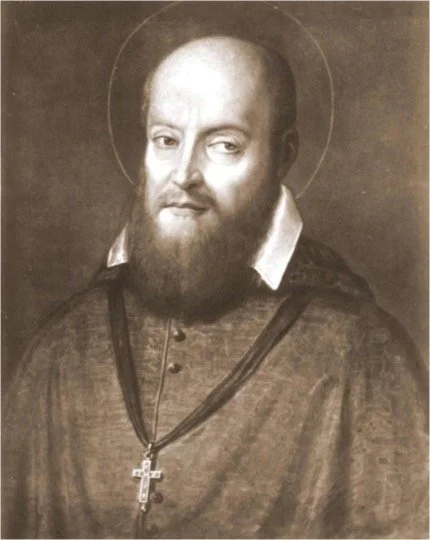
Francis de Sales wrote the Introduction to the Devout Life in the early 1600s, and right out of the gate — the very first chapter — he torches a certain kind of religious person most of us would recognize immediately. He’s talking about you if you’ve ever been strict about one thing while completely ignoring another. His diagnosis is surgical:
All of us depict devotion according to our own preferences and fancies. The one who fasts, for instance, will believe he is devout simply because he fasts, even if his heart is full of hatred. For sobriety’s sake, he will not moisten his tongue with wine or even with water, yet he will not hesitate to plunge it into his neighbor’s blood through slander and calumny. Another esteems herself devout because she multiplies prayers, and yet afterwards speaks arrogantly to her employees or to her neighbor. Another person will gladly take alms from his wallet to give to the poor, but refuses to draw kindness from his heart to pardon his enemies. All these persons may pass for being devout but they are nevertheless not so.
— St. Francis de Sales, Introduction to the Devout Life
Francis is identifying a spiritual trap that’s embarrassingly common: we pick the religious practice we’re already comfortable with, perform it well, and call it devotion — while ignoring the harder interior work entirely. The faster doesn’t deal with his bitterness. The pray-er doesn’t deal with her pride. The almsgiving man won’t forgive his enemies. Each one has constructed a custom, convenient religion shaped around their own personality — while the actual heart remains untouched. Francis is saying: that’s not devotion. That’s spiritual preference dressed up in holy clothing.
St. Augustine
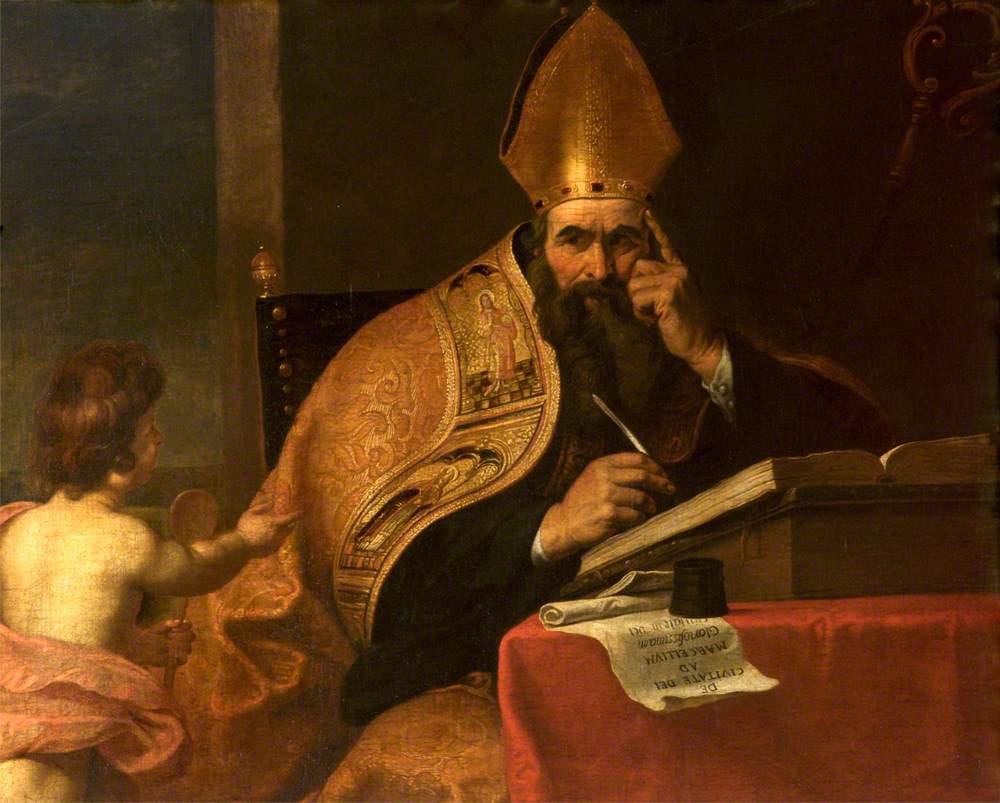
Augustine lived this problem before he diagnosed it. He spent years being deeply religious in the wrong direction — philosophical, self-convinced, morally comfortable in his own reasoning. His whole Confessions is a long reckoning with the gap between what his intellect accepted and what his will refused to surrender. So when he writes about virtue without genuine piety, he knows exactly what he’s describing from the inside:
However much that virtue may be praised and cried up, which without true piety is the slave of human glory, it is not at all to be compared even to the feeble beginnings of the virtue of the saints, whose hope is placed in the grace and mercy of the true God.
— St. Augustine of Hippo, City of God, Book V
Augustine is making a bold and counterintuitive claim: virtue itself — actual moral discipline, genuine good behavior, real self-control — can still be completely hollow if it isn’t rooted in true piety. Why? Because without God at the center, all that virtue is ultimately serving the self. It’s seeking praise, maintaining reputation, managing appearances. It’s “the slave of human glory.” And a virtue that serves human glory rather than God isn’t really virtue at all — it’s a more sophisticated kind of pride. Augustine says bluntly: even the weakest, most stumbling, most imperfect saint who genuinely places their hope in God is doing something incomparably greater than the person who performs moral excellence for their own honor.
St. John Vianney

If Francis de Sales is the gentle spiritual director and Augustine the philosopher, John Vianney is the parish priest who has seen everything. He spent forty-one years hearing confessions in Ars, and very little surprised him about the human heart. In one of his sermons on lukewarmness, he paints a portrait so specific it’s almost uncomfortable to read:
He would prefer to go to Holy Communion before or after Mass, that is to say, when there is no one present. Yet he is quite happy to be seen by the good people who know nothing about his evil life and among whom he would like to arouse good opinions about himself. In front of devout people he talks about religion. When he is with those who have no religion, he will talk only about the pleasures of the world. He would blush to fulfil his religious practices in front of his companions or those boys and girls who share his evil ways… Is it possible, my brethren, that one could think upon such horrible behaviour without shuddering?
— St. John Vianney, Sermon on Lukewarmness
Vianney is describing a person who has essentially built two completely separate lives — a religious version for public consumption and a worldly version for private enjoyment — and who is consciously managing which audience sees which face. The Communion is received in secret not from humility, but from shame — because the person knows their life doesn’t match what receiving Communion means. They want the credit for being devout without the cost of actually being devout. Vianney, who had seen this exact pattern in the confessional thousands of times, calls it what it is: horrible. Not disappointing, not unfortunate — horrible. He says this with the full weight of pastoral authority.
What makes Vianney’s version of this warning so distinct from de Sales and Augustine is its intimacy. He’s not describing a philosophical category — he’s describing a real person, probably someone from his own parish, sitting in a pew, calculating how they look to the people around them. Religion as reputation management. Sacraments as social currency.
And if that sounds harsh, consider what Vianney was actually offering: the cure. He spent up to eighteen hours a day in the confessional. He understood sin not as a verdict but as a wound. The shuddering tone in his sermon isn’t condemnation; it’s the voice of a doctor who wants his patient to stop pretending they’re not sick. You can’t be healed from an illness you won’t admit you have.
All three of these saints are circling the same territory. They converge on a single uncomfortable truth: the performance of religion — however impressive, however consistent — is not holiness. Holiness is what happens when the heart actually moves. When the will actually bends. When the prayer is connected to something real in you, not just a recitation you’ve mastered. They’re not asking whether you go to Mass. They’re asking what happens to you when you’re there.
Follow the Catholic firebrand, TJ Haines, everywhere on socials
Episode That Sparked this Heat
 TJ Haines


Member discussion