


Catholics talk constantly about a “crisis in the Church,” but the phrase has become a catchall for everything from weak preaching and liturgical abuse to Vatican II, the Novus Ordo, and failures of leadership. In this episode, T.J. challenges that diagnosis and argues that the visible controversies are symptoms of something much deeper.
The Crisis Catholics Think They See
“Truths do not lead to lies. Truths lead to truths.”
The usual diagnosis focuses on scandal, irreverence, doctrinal confusion, compromised bishops, and abuses within the liturgy. Some of those problems are real, but they are often exaggerated into sweeping claims that cannot withstand careful scrutiny.
I address
- Why isolated abuses should not be treated as the ordinary Catholic experience
- How legitimate criticism becomes distorted into rejection of the Church
- Why the “crisis” narrative repeatedly produces indefensible claims
- The difference between reverence and using liturgy as an ideological refuge
The Deeper Crisis
“If the crisis in the Church is true, why does it keep leading people to lies?”
The real crisis is that Catholics are losing the ability to recognize, receive, and reason from truth.
That loss manifests in several ways:
- A weakened sense of the sacred
- A diminished sense of sin
- False ideas of charity that silence necessary truth
- Sweeping judgments about the Church and her leaders
- Confusion between fidelity and rebellion
- An inability to test claims against reason, reality, and the Catholic faith
The problem is not simply that Catholics sometimes hold incorrect opinions. The deeper problem is that many are losing the intellectual and spiritual facility needed to recognize truth when it is placed in front of them.
When Criticism Becomes Distortion
Legitimate criticism has a place in Catholic life. Bishops can fail. Priests can preach poorly. Liturgical abuses can happen. Catholic institutions can compromise themselves.
But criticism becomes distortion when exceptions are treated as the rule, when every scandal becomes evidence of total collapse, or when disappointment with the Church becomes permission to reject her authority, her liturgy, or her visible unity.
I also argue that liturgy itself can be abused from more than one direction. A sacred liturgy can be treated irreverently, but it can also be turned into an ideological shelter or used as a statement of rejection against the rest of the Church.
Why the Loss of Truth Matters
Catholics who cannot distinguish truth from falsehood are especially vulnerable to lies that closely resemble authentic faith.
Years of fear, outrage, suspicion, and distorted messaging—particularly from parts of independent Catholic media—have made that vulnerability worse. Catholics are being trained to react emotionally to claims that sound traditional, courageous, or spiritually urgent without first asking whether those claims are actually true.
The episode closes with a sobering possibility: a Church that cannot distinguish truth from persuasive falsehood will be dangerously unprepared for the greatest religious deception Christians have been warned to expect.
FULL EPISODE
 TJ Haines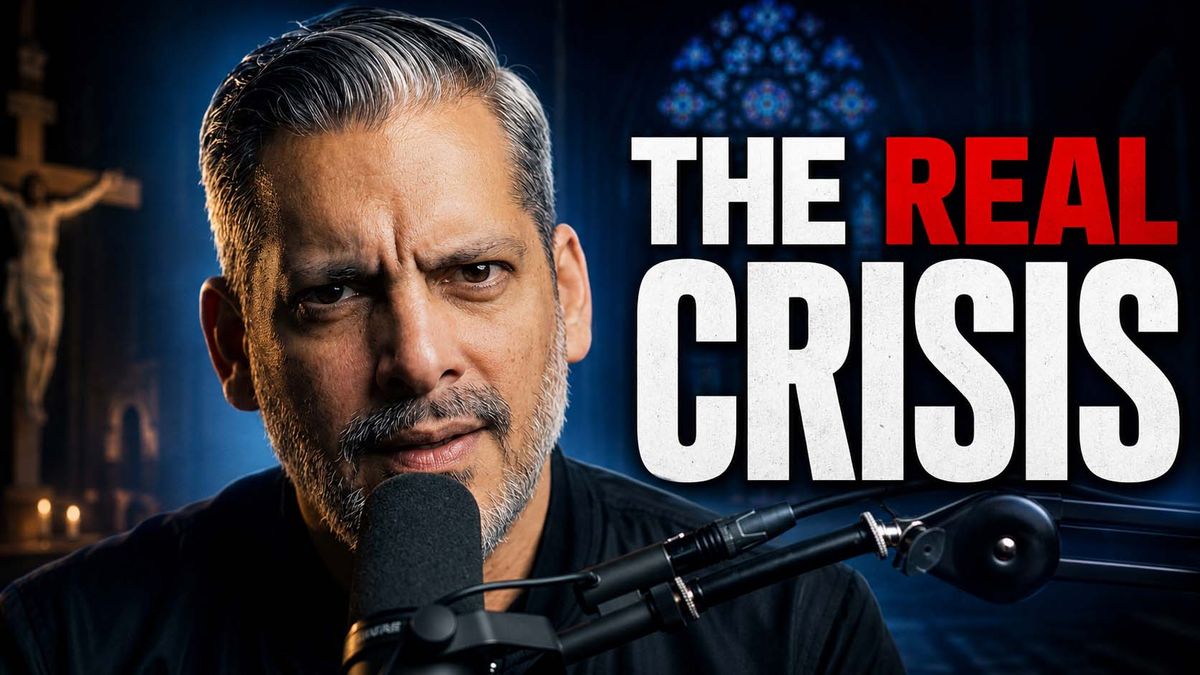


Member discussion