


In this Firebrand Brief (turned out not-so-brief), I react to the surprising backlash I received after encouraging Catholics to pray in their native language — and I dismantles the increasingly popular idea that Latin is somehow “more powerful” in private prayer.
This episode sets the stage for a larger upcoming discussion on prayer, merit, exorcism claims, the influence of internet Catholicism, and whether some Catholics have confused reverence for Latin with superstition.
Show Notes, and Full Episode Links below
Want to get right into the full episode instead?
 TJ Haines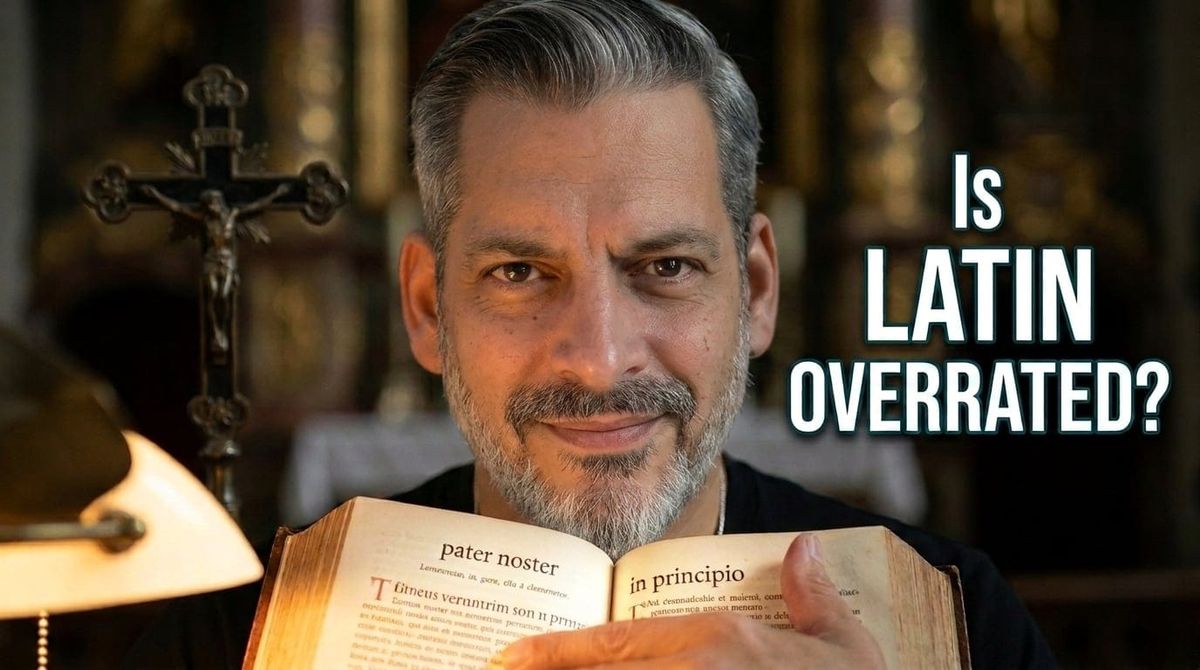
Segment One — “Pray in the Language You Think In”
“When I am praying, I’m not just voicing words. I’m expressing my heart.”
I explain why prayer in one’s native language often connects more deeply to the heart than prayer in Latin. I argues that language is tied to personal formation, identity, emotion, and interior life — and that prayer is not merely saying words, but elevating the heart to God.
Highlights
- Why “Our Father” lands differently than Pater Noster
- The emotional and spiritual weight of native language
- Prayer as personal connection, not performance
- Why Latin is not “bad” — but also not automatically “better”
- The difference between understanding words and inhabiting them
Segment Two — The Myth of “More Powerful” Latin Prayer
“The Church has never said Latin is a more powerful prayer because it’s the language of the Church.”
After posting a harmless video encouraging Catholics to pray in their native tongue, I received heavy pushback from Catholics insisting Latin is spiritually stronger, more effective against demons, or inherently superior because of its connection to the Church and the Traditional Latin Mass.
I respond directly to those claims.
Highlights
- Why exorcism rites are not comparable to private prayer
- The misuse of the Traditional Latin Mass in these arguments
- The difference between sacred languages and “magical” languages
- Father Chad Ripperger’s influence on this discourse
- Why the Church has never taught that Latin prayers have greater merit
- The danger of treating exorcists like a parallel magisterium
Segment Three — What Actually Gives Prayer Power?
“Latin does not make your prayer superior.”
I close by explaining what actually strengthens prayer: holiness, sacrifice, intention, humility, focus, and sincerity — not the language itself. I then warn against pride, spiritual elitism, and turning Latin into a kind of Catholic superstition.
Finally, I also shares personal stories about teaching himself ecclesial Latin as a child and explains why I still values Latin deeply — while rejecting exaggerated claims about its spiritual superiority.
Highlights
- Merit, sacrifice, and holiness in prayer
- Why rushed prayer becomes “just mouthing words”
- The spiritual danger of pride in religious aesthetics
- Learning Latin as devotion vs. learning Latin as status
- Why every Catholic should still learn core prayers in Latin
- The difference between honoring tradition and idolizing it
“Latin does not make your prayer superior.”
Referenced Topics
- Private prayer vs. liturgical prayer
- Traditional Latin Mass
- Father Chad Ripperger
- Father Gabriel Amorth
- Father Gary Thomas
- Sacred languages in Christianity
- Merit in Catholic spirituality
- Prayer and interior disposition
- Ecclesial Latin
- The role of humility in holiness


Member discussion